THE LAST PLAY
"THE LAST PLAY" is an XR interactive film that blends VR, MR technology, and physical space. It depicts a future world where "death" is deliberately designed as a form of "immersive entertainment." Audiences enter through a neural interface left behind by a "death experience designer," uncovering the designer's fragmented memories and facing various existential choices. When death becomes repeatable, will we forget how to truly live?
Year of Completion:
2025
Awards and Exhibitions
Ars Electronica
The 3rd "Metaverse Future" Metaverse Design Creative Competition — Extraordinary Wing Fund (10,000 RMB Prize, Top 0.8%)
Beijing Indie Game Only Exhibition
Muse Design Awards Silver Winner
First Prize in the Student Group of the "National Youth Cup" College Art and Design Works Exhibition
Responsible for:
Research, conceptual design, screenwriting, XR game design and development (Quest, Unity), sound effects, music, physical space construction

Video
Source of inspiration
As four designers with backgrounds in the entertainment industry, our team has always closely followed the development of media and storytelling. A casual chat made us realize two worrying trends in the current entertainment field:

This makes us wonder: if "more immersive" and "more stimulating" experiences become the norm, how will "entertainment" evolve in the future? Could the "most stimulating" experience of all—death itself—be designed as an entertainment product for people to "consume"?
Narrative Design
To simulate a future scenario where "death" is engineered and transformed into entertainment, XR technology, especially VR, becomes the most suitable choice of medium. It allows us to construct a virtual experience space, thereby creating a rich-layered and highly immersive narrative experience. At the same time, the symbol "VR" also represents frontier forms of entertainment as well as highly immersive technology.
Case Study


In the VR experience, the audience is no longer just passive viewers; instead, they need to have a certain degree of agency and freedom to actively participate in the narrative. Ideally, the audience should be able to embody a specific character and exert an influence on the direction of the narrative.
At the same time, compared to traditional media, VR introduces richer narrative dimensions, which also brings new questions: How can we guide player interaction without breaking the sense of immersion? How can we make players emotionally invested rather than feeling confused? And how can we utilize the spatial environment to strengthen narrative expression? These are all directions we hope to further explore in subsequent designs and experiments.
How to conduct XR interactive storytelling?
Interactive storytelling primarily adopts a braided narrative structure, integrating elements of environmental storytelling and branching narrative (Hamlet on the Holodeck, Murray, 1997).


The entire experience unfolds across three levels: physical space, MR, and VR. The narrative begins with the player entering the real-world environment, progresses as they switch between MR and VR through the headset, and ultimately returns to the physical space to conclude.

Story Summary

In a future world shaped by advanced technology, a global entertainment empire has risen, and it revolves entirely around one ultimate theme: death. Its signature product is a highly immersive VR experience that allows users to repeatedly experience simulated final moments, quickly taking the world by storm.
Who is the mastermind behind this empire? It is your uncle, Matt—a legendary "genius designer" revered for crafting death experiences that are disturbingly realistic. But few know that these experiences are not pure fiction; they are derived from real human near-death memories, extracted directly from human neural data.
As a player, you return to his former private residence and discover a final letter left behind, inviting you into his encrypted personal VR system. In this hidden world made of fragmented memories, you need to unravel an unfinished experience and confront ultimate questions about humanity, mortality, and the ethics of entertainment.
Scene Design
Scenography & Spatial Flow Design
Desert Wingsuit Flying
Desert Wingsuit Flying

Volcano Rock Climbing
Volcano Rock Climbing

Undersea diving
Undersea diving

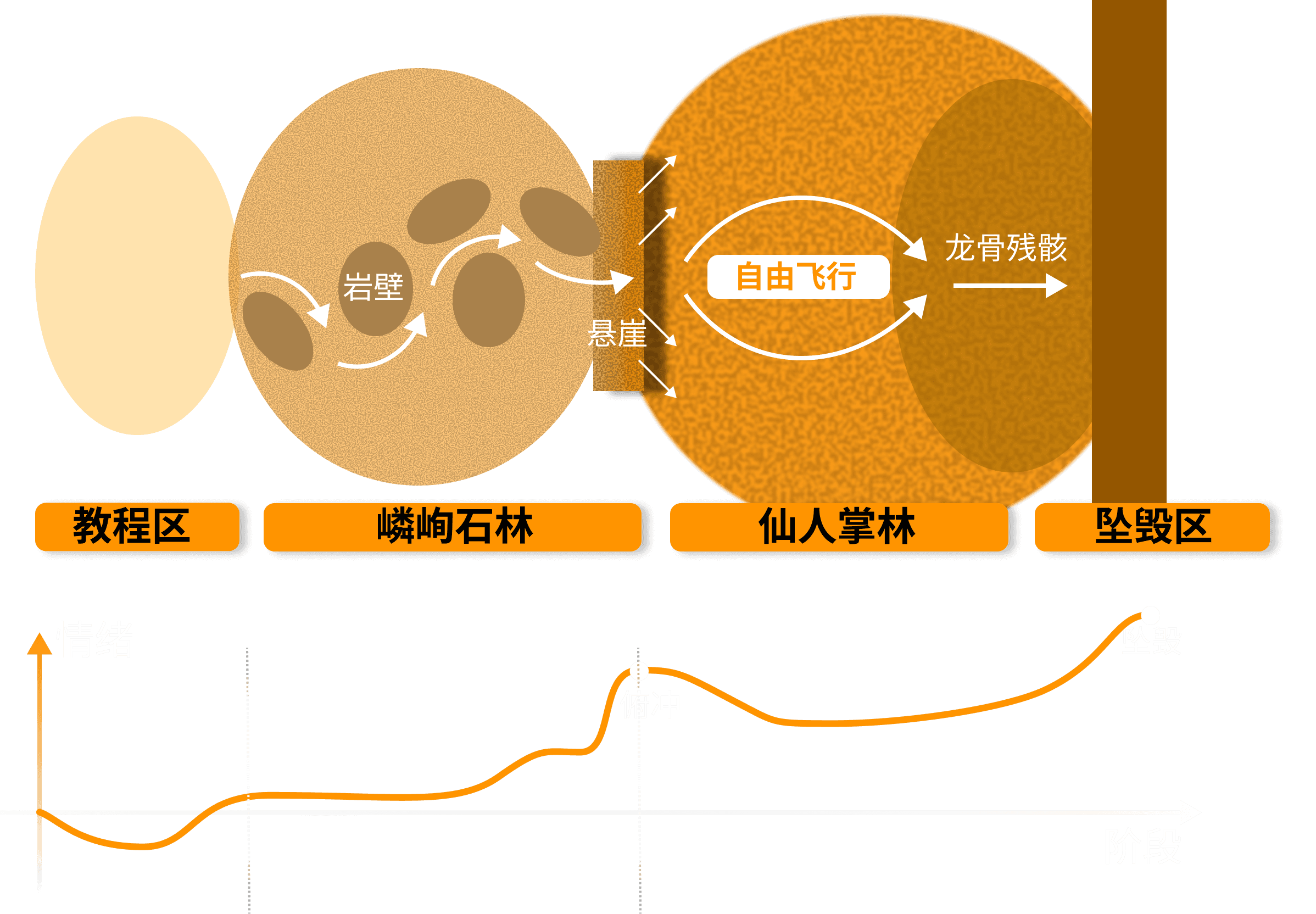


Memory Space
Memory Space

Gameplay Design
VR embodied interaction

Spread both arms to simulate wingsuit flying.
Steer by tilting your arms:
Raise left arm → Turn right
Raise right arm → Turn left
Hold down the trigger to grab.
Alternate your hands to climb in a more realistic way.
Hold the trigger and push the water backward to swim forward.
Push the water upward to dive deeper.
MR Spatial Interaction
During the MR phase, players can explore freely and gradually discover that some objects convey story information through environmental storytelling, while others, when interacted with in specific ways, trigger voiceover narration or even transition the experience into a VR scene.

Technical Development
The project is developed based on the Unity engine and collaboratively managed through GitHub. XR functionality is implemented using the XR Interaction Toolkit, while MR effects are built upon Meta Building Blocks.

To ensure an immersive experience, we designed a seamless transition from MR to VR by gradually adjusting the Passthrough transparency and combining it with a diffusion effect shader, effectively reducing visual stuttering during scene switches.


Exhibition
The work was exhibited at ARS ELECTRONICA 2025 (September 3 to 7, Linz, Austria), gaining widespread professional recognition within the global art and technology community and attracting the active participation of a diverse audience.


The work was also awarded the 'Metaverse Future' Metaverse Design Creative Competition - Extraordinary Creative Wings Fund (top 0.8%), and was invited to participate in the competition exhibition (October 1st - November 23rd, Shanghai, China).

Production Process


Other Projects


THE LAST PLAY
"THE LAST PLAY" is an XR interactive film that blends VR, MR technology, and physical space. It depicts a future world where "death" is deliberately designed as a form of "immersive entertainment." Audiences enter through a neural interface left behind by a "death experience designer," uncovering the designer's fragmented memories and facing various existential choices. When death becomes repeatable, will we forget how to truly live?
Year of Completion:
2025
Awards and Exhibitions
Ars Electronica
The 3rd "Metaverse Future" Metaverse Design Creative Competition — Extraordinary Wing Fund (10,000 RMB Prize, Top 0.8%)
Beijing Indie Game Only Exhibition
Muse Design Awards Silver Winner
First Prize in the Student Group of the "National Youth Cup" College Art and Design Works Exhibition
Responsible for:
Research, conceptual design, screenwriting, XR game design and development (Quest, Unity), sound effects, music, physical space construction
Video
Source of inspiration
As four designers with backgrounds in the entertainment industry, our team has always closely followed the development of media and storytelling. A casual chat made us realize two worrying trends in the current entertainment field:
This makes us wonder: if "more immersive" and "more stimulating" experiences become the norm, how will "entertainment" evolve in the future? Could the "most stimulating" experience of all—death itself—be designed as an entertainment product for people to "consume"?
Narrative Design
To simulate a future scenario where "death" is engineered and transformed into entertainment, XR technology, especially VR, becomes the most suitable choice of medium. It allows us to construct a virtual experience space, thereby creating a rich-layered and highly immersive narrative experience. At the same time, the symbol "VR" also represents frontier forms of entertainment as well as highly immersive technology.
Case Study
In the VR experience, the audience is no longer just passive viewers; instead, they need to have a certain degree of agency and freedom to actively participate in the narrative. Ideally, the audience should be able to embody a specific character and exert an influence on the direction of the narrative.
At the same time, compared to traditional media, VR introduces richer narrative dimensions, which also brings new questions: How can we guide player interaction without breaking the sense of immersion? How can we make players emotionally invested rather than feeling confused? And how can we utilize the spatial environment to strengthen narrative expression? These are all directions we hope to further explore in subsequent designs and experiments.
How to conduct XR interactive storytelling?
Interactive storytelling primarily adopts a braided narrative structure, integrating elements of environmental storytelling and branching narrative (Hamlet on the Holodeck, Murray, 1997).
The entire experience unfolds across three levels: physical space, MR, and VR. The narrative begins with the player entering the real-world environment, progresses as they switch between MR and VR through the headset, and ultimately returns to the physical space to conclude.
Story Summary
In a future world shaped by advanced technology, a global entertainment empire has risen, and it revolves entirely around one ultimate theme: death. Its signature product is a highly immersive VR experience that allows users to repeatedly experience simulated final moments, quickly taking the world by storm.
Who is the mastermind behind this empire? It is your uncle, Matt—a legendary "genius designer" revered for crafting death experiences that are disturbingly realistic. But few know that these experiences are not pure fiction; they are derived from real human near-death memories, extracted directly from human neural data.
As a player, you return to his former private residence and discover a final letter left behind, inviting you into his encrypted personal VR system. In this hidden world made of fragmented memories, you need to unravel an unfinished experience and confront ultimate questions about humanity, mortality, and the ethics of entertainment.
Scene Design
Scenography & Spatial Flow Design
Desert Wingsuit Flying
Desert Wingsuit Flying
Volcano Rock Climbing
Volcano Rock Climbing
Undersea diving
Undersea diving
Memory Space
Memory Space
Gameplay Design
VR embodied interaction
Spread both arms to simulate wingsuit flying.
Steer by tilting your arms:
Raise left arm → Turn right
Raise right arm → Turn left
Hold down the trigger to grab.
Alternate your hands to climb in a more realistic way.
Hold the trigger and push the water backward to swim forward.
Push the water upward to dive deeper.
MR Spatial Interaction
During the MR phase, players can explore freely and gradually discover that some objects convey story information through environmental storytelling, while others, when interacted with in specific ways, trigger voiceover narration or even transition the experience into a VR scene.
Technical Development
The project is developed based on the Unity engine and collaboratively managed through GitHub. XR functionality is implemented using the XR Interaction Toolkit, while MR effects are built upon Meta Building Blocks.
To ensure an immersive experience, we designed a seamless transition from MR to VR by gradually adjusting the Passthrough transparency and combining it with a diffusion effect shader, effectively reducing visual stuttering during scene switches.
Exhibition
The work was exhibited at ARS ELECTRONICA 2025 (September 3 to 7, Linz, Austria), gaining widespread professional recognition within the global art and technology community and attracting the active participation of a diverse audience.
The work was also awarded the 'Metaverse Future' Metaverse Design Creative Competition - Extraordinary Creative Wings Fund (top 0.8%), and was invited to participate in the competition exhibition (October 1st - November 23rd, Shanghai, China).
Production Process
Other Projects
THE LAST PLAY
"THE LAST PLAY" is an XR interactive film that blends VR, MR technology, and physical space. It depicts a future world where "death" is deliberately designed as a form of "immersive entertainment." Audiences enter through a neural interface left behind by a "death experience designer," uncovering the designer's fragmented memories and facing various existential choices. When death becomes repeatable, will we forget how to truly live?
Year of Completion:
2025
Awards and Exhibitions
Ars Electronica
The 3rd "Metaverse Future" Metaverse Design Creative Competition — Extraordinary Wing Fund (10,000 RMB Prize, Top 0.8%)
Beijing Indie Game Only Exhibition
Muse Design Awards Silver Winner
First Prize in the Student Group of the "National Youth Cup" College Art and Design Works Exhibition
Responsible for:
Research, conceptual design, screenwriting, XR game design and development (Quest, Unity), sound effects, music, physical space construction
Video
Source of inspiration
As four designers with backgrounds in the entertainment industry, our team has always closely followed the development of media and storytelling. A casual chat made us realize two worrying trends in the current entertainment field:
This makes us wonder: if "more immersive" and "more stimulating" experiences become the norm, how will "entertainment" evolve in the future? Could the "most stimulating" experience of all—death itself—be designed as an entertainment product for people to "consume"?
Narrative Design
To simulate a future scenario where "death" is engineered and transformed into entertainment, XR technology, especially VR, becomes the most suitable choice of medium. It allows us to construct a virtual experience space, thereby creating a rich-layered and highly immersive narrative experience. At the same time, the symbol "VR" also represents frontier forms of entertainment as well as highly immersive technology.
Case Study
In the VR experience, the audience is no longer just passive viewers; instead, they need to have a certain degree of agency and freedom to actively participate in the narrative. Ideally, the audience should be able to embody a specific character and exert an influence on the direction of the narrative.
At the same time, compared to traditional media, VR introduces richer narrative dimensions, which also brings new questions: How can we guide player interaction without breaking the sense of immersion? How can we make players emotionally invested rather than feeling confused? And how can we utilize the spatial environment to strengthen narrative expression? These are all directions we hope to further explore in subsequent designs and experiments.
How to conduct XR interactive storytelling?
Interactive storytelling primarily adopts a braided narrative structure, integrating elements of environmental storytelling and branching narrative (Hamlet on the Holodeck, Murray, 1997).
The entire experience unfolds across three levels: physical space, MR, and VR. The narrative begins with the player entering the real-world environment, progresses as they switch between MR and VR through the headset, and ultimately returns to the physical space to conclude.
Story Summary
In a future world shaped by advanced technology, a global entertainment empire has risen, and it revolves entirely around one ultimate theme: death. Its signature product is a highly immersive VR experience that allows users to repeatedly experience simulated final moments, quickly taking the world by storm.
Who is the mastermind behind this empire? It is your uncle, Matt—a legendary "genius designer" revered for crafting death experiences that are disturbingly realistic. But few know that these experiences are not pure fiction; they are derived from real human near-death memories, extracted directly from human neural data.
As a player, you return to his former private residence and discover a final letter left behind, inviting you into his encrypted personal VR system. In this hidden world made of fragmented memories, you need to unravel an unfinished experience and confront ultimate questions about humanity, mortality, and the ethics of entertainment.
Scene Design
Scenography & Spatial Flow Design
Desert Wingsuit Flying
Desert Wingsuit Flying
Volcano Rock Climbing
Volcano Rock Climbing
Undersea diving
Undersea diving
Memory Space
Memory Space
Gameplay Design
VR embodied interaction
Spread both arms to simulate wingsuit flying.
Steer by tilting your arms:
Raise left arm → Turn right
Raise right arm → Turn left
Hold down the trigger to grab.
Alternate your hands to climb in a more realistic way.
Hold the trigger and push the water backward to swim forward.
Push the water upward to dive deeper.
MR Spatial Interaction
During the MR phase, players can explore freely and gradually discover that some objects convey story information through environmental storytelling, while others, when interacted with in specific ways, trigger voiceover narration or even transition the experience into a VR scene.
Technical Development
The project is developed based on the Unity engine and collaboratively managed through GitHub. XR functionality is implemented using the XR Interaction Toolkit, while MR effects are built upon Meta Building Blocks.
To ensure an immersive experience, we designed a seamless transition from MR to VR by gradually adjusting the Passthrough transparency and combining it with a diffusion effect shader, effectively reducing visual stuttering during scene switches.
Exhibition
The work was exhibited at ARS ELECTRONICA 2025 (September 3 to 7, Linz, Austria), gaining widespread professional recognition within the global art and technology community and attracting the active participation of a diverse audience.
The work was also awarded the 'Metaverse Future' Metaverse Design Creative Competition - Extraordinary Creative Wings Fund (top 0.8%), and was invited to participate in the competition exhibition (October 1st - November 23rd, Shanghai, China).
Production Process